
Male Educator Network & Policy Institute
Millions of boys go through school without ever having a male teacher. MEN is treating that as a solvable problem.


Who they are.
The Male Educator Network & Policy Institute (MEN) is building a national movement to recruit, retain, and champion men in education.
Today millions of boys go through school without a single male teacher. MEN uses research, policy, and community building to address the fact that these boys are unable to see themselves reflected in the adults who teach them. MEN describes itself as “part think tank, part fraternity“; one arm of the organization produces the research and policy case for recruiting and retaining male teachers, while the other builds a national brotherhood, with in-person chapters, an active college council, and a fast-growing membership community.
Why we believe in the leader.

MEN is led by Curtis Valentine, its founding president, whose own path as a teacher, school board member, Harvard Kennedy School graduate, and adjunct professor gives him experience on both the classroom and policy sides of this issue. Curtis previously founded Real Men Teach, a community focused on recruiting and retaining male educators of color and has spent two decades pushing for diversity in teaching.
What stands out is Curtis’s ability to build durable coalitions: MEN’s board and advisory council span university deans, national teacher-of-the-year honorees, and leaders from nationally recognized organizations. Since the launch of MEN, Curtis has already secured national speaking engagements, garnered press attention (Crain’s Detroit, EdSurge), produced a mini-documentary, and is releasing a book, Real Men Teach, this November.
Why the work got us excited.
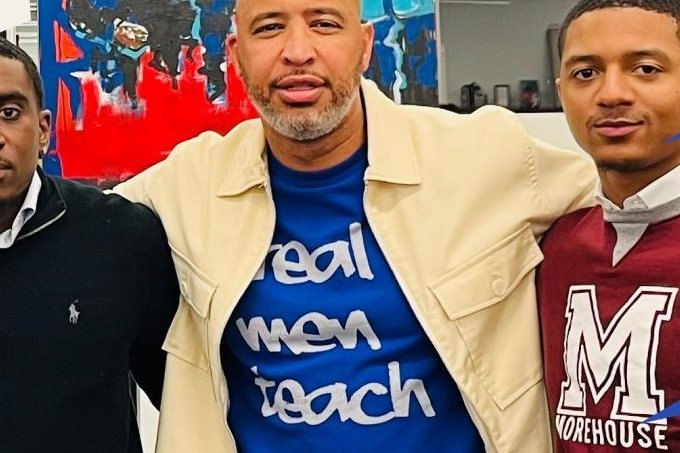
The idea at the center of MEN’s work is concrete: male teachers demonstrably improve outcomes for boys, yet the pipeline into the profession keeps shrinking. MEN is treating this trend as a solvable policy and culture problem at national scale by publishing data-driven research while building the community that helps men stay in the profession.
Since its founding in 2026, MEN has moved quickly. It has already engaged with policymakers on both sides of the aisle, is actively supporting Virginia’s first permanent, bipartisan state commission on boys and men, is advising state and legislative leaders from five different states, and has a bipartisan federal bill in motion. Additionally, MEN has developed and grown their College Council. The organization sees itself as connective tissue for the field, amplifying and building on the work of existing groups rather than competing with them.
“Change happens when those closest to the issue are informed, organized, empowered, energized, and supported with the resources necessary for the challenge.”
— Curtis Valentine


